A carpet that is still soaked the next morning is rarely just drying slowly. In most cases water went in that never came back out. That is over wetting, and it is behind most of the calls we get about a floor cleaned by somebody else or with a rented machine.
Normal drying times are covered separately: within hours in warm, dry weather, longer in winter, and up to 48 hours for thick carpet in a cold or closed up room. Those times stop applying when the water is under the carpet rather than in the pile.
What over wetting is
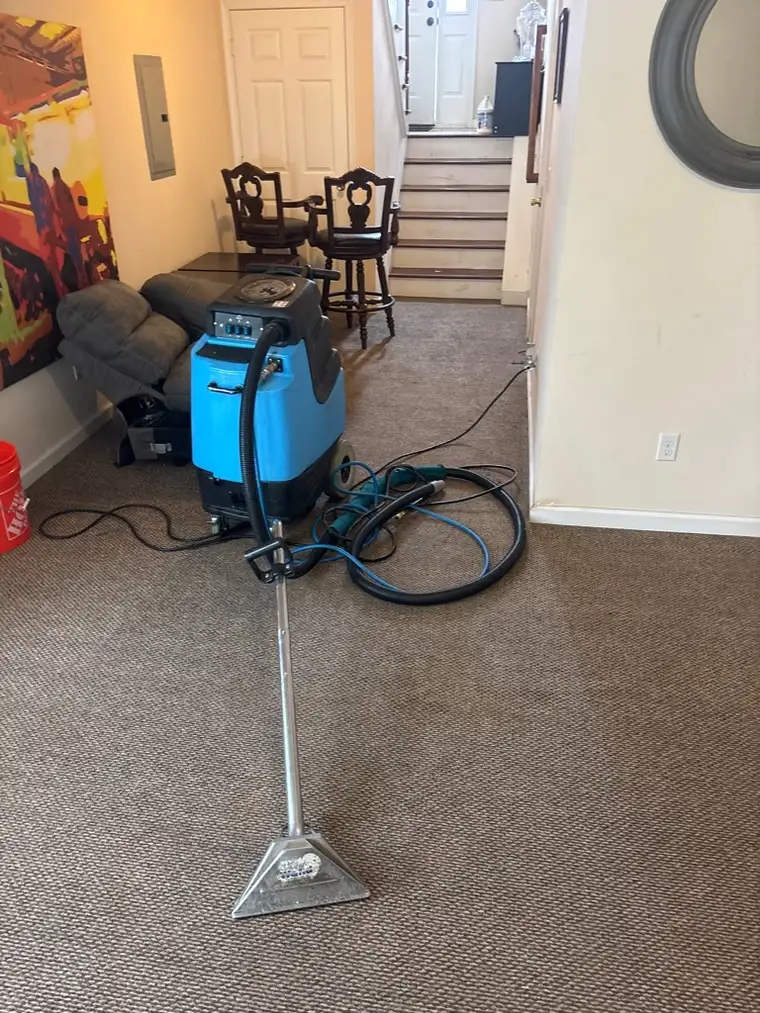
Hot water extraction has two halves that happen half a second apart. Heated solution goes into the pile under pressure, and the same head pulls it back out with the soil it released. The cleaning happens on the way in. The drying time is decided on the way out.
When the recovery side is weaker than the injection side, the difference sinks. Water passes through the backing into the padding, which holds more than the carpet above it and gives it up far slower. The pile can feel nearly dry while the padding underneath is still full of water.
Where the extra water comes from
- A rental unit is built around a small vacuum motor. It lays water down well enough and cannot pull it back with the same force, so part of every pass stays in the carpet.
- Shampooers work foam into the pile with almost no recovery. The soil is loosened and left in place, sitting in detergent.
- Repeated passes over one stain add water. When a mark stays visible, the common response is another wet pass over the same square foot, and then another. That is how a damp spot becomes a wet pad.
- The dry pass gets skipped. Running the head back with no solution going in is where much of the water returns to the tank, and it is the slow part.
A professional machine used badly does the same thing, so this is technique rather than brand.
How to tell over wetting from ordinary slow drying
Fold a white towel, put it on the carpet and stand on it for ten seconds. Do that in three places: the middle of the room, the edge near a wall, and wherever the machine spent longest.
| What you check | Ordinary drying | Over wetting |
|---|---|---|
| Feel underfoot at 24 hours | Cool, not damp | Damp, wet at the edges |
| White towel under your weight | Dry | Picks up moisture |
| Smell at floor level on day three | Nothing | Musty when you kneel down |
| New marks | No new marks | Brown rings where it looked clean |
| Carpet surface | Flat | Ripples or waves |
| Baseboard | Dry | Damp along the bottom |
Ripples are the symptom that concerns people most. Carpet takes on water and expands, so a well stretched carpet can go wavy while it is wet. Most of that pulls back as the floor dries. Where it does not, the carpet has to be stretched again.
What to do in the next few hours
- Move air across the floor rather than down at it. A box fan on the ground pointing sideways strips off the saturated air lying on the pile, and it is the most effective thing you can do.
- Open the interior doors. A closed room with a fan in it stirs its own humidity around.
- Run the air conditioning when it is humid outside. In a North Jersey August the outdoor air is often wetter than the indoor air, so open windows can slow the floor down.
- Put a dehumidifier in the room, shut the door and empty the tank. If it keeps filling, the floor is still holding water.
- Get the furniture off the pile. Anything solid blocks air, and a wooden or metal foot can transfer a mark into damp fiber.
- Stay off it in shoes. An open damp pile takes soil straight back in.
Heat on its own fails the same way. Turning the thermostat up with the house shut produces warm saturated air, which dries nothing.
How this looks in North Jersey
Winter is when it shows most. Cold air holds less moisture, so a closed up house in February takes on water slowly, and a floor that would have dried by the evening in September is still damp the next morning.
Below grade rooms are worse. A finished basement is cooler and more humid than the rest of the house all year, which is why we use air movers there as standard. A one bedroom in Jersey City or Bayonne with one exposed wall gets almost no cross draft, so drying has to be mechanical.
When it has stopped being a drying problem
Carpet still plainly wet at 48 hours is holding the water in the padding rather than in the fibers, and the padding sits enclosed, warm and dark under the floor.
Those are the same conditions described on our Water damage restoration page. No pipe burst here. The water arrived a cupful at a time from a machine, and the effect on the padding is the same.
Wicking is the other sign. As the padding dries, moisture travels back up through the backing and carries dissolved soil with it. That is the brown ring in a spot that looked clean when the cleaner left, and it is the same mechanism that brings a surface cleaned pet stain back.
A floor in that state needs extraction rather than more fans. Pull the water out of the carpet and the pad, then run air movers and a dehumidifier until the materials measure dry rather than until the surface feels dry. Sometimes the padding has to be replaced, and we tell you that before the work begins.
The resoiling that follows a bad clean
The second problem appears weeks later, once everything is dry. Detergent that went in and never came back out stays in the pile and stays tacky, so every footstep presses fresh soil into it. That is why people report a carpet soiling faster after it was cleaned. Shampoo residue is the worst version, and a carpet that is damp and tacky underfoot needs flushing with clean solution rather than another shampoo.
How the visit avoids it
We use heat and a controlled volume of solution, so less water does the same work, followed by slow recovery passes and dry passes with nothing going in. Stairs are cleaned with hand tools, because the carpet wraps the nose of each tread and holds water in the fold. We carry air movers, so if a room has to be usable by a set time, say so when you book.
When to call us
Call if the carpet is still wet more than a day after cleaning, if a brown ring has come up as it dried, or if the room smells musty near the floor. Describe it on the phone and we will tell you whether it is a fan problem or a padding problem. Carpet Cleaning Wizards is veteran and Latino owned, rated 5.0 from 328 Google reviews. All services are performed at your home or business. The estimate is written before work starts, and booking is by appointment 24 hours a day on (908) 545-9387.