Parents ask about carpet cleaning chemicals almost as often as they ask about price, and pet owners usually a few questions later. Both questions come from the same place: something that smells strong or clings to fiber for days gets touched by hands, paws and bare feet long after the technician has left. Most of the discomfort people have with carpet cleaning is about leftover residue, not the act of cleaning itself. What gets used and how thoroughly it gets rinsed out matters far more than whether a bottle says green on the label.
What heavy duty cleaners can leave behind
Some carpet cleaning products lean on ammonia or a high-pH degreaser to cut through heavy grease and old traffic soil fast. Those work, but they leave an alkaline residue behind if the fiber is not rinsed well, and that residue can irritate skin on contact, especially on a crawling infant or a dog that spends half the day lying on the floor. Heavy synthetic fragrance is another common shortcut. A strong scent masks lingering soil and odor rather than removing it, and fragrance oils sit in the fiber the same way soil does until they are rinsed or worn off. A few preservative systems used in bulk cleaning concentrates release small amounts of formaldehyde as a carrier to keep the solution shelf stable. A household with a toddler who still puts fists on the floor or a dog that licks its paws after every walk has reason to ask what is in the solution before the cleaning starts.
What enzyme-based, low-residue cleaning uses instead
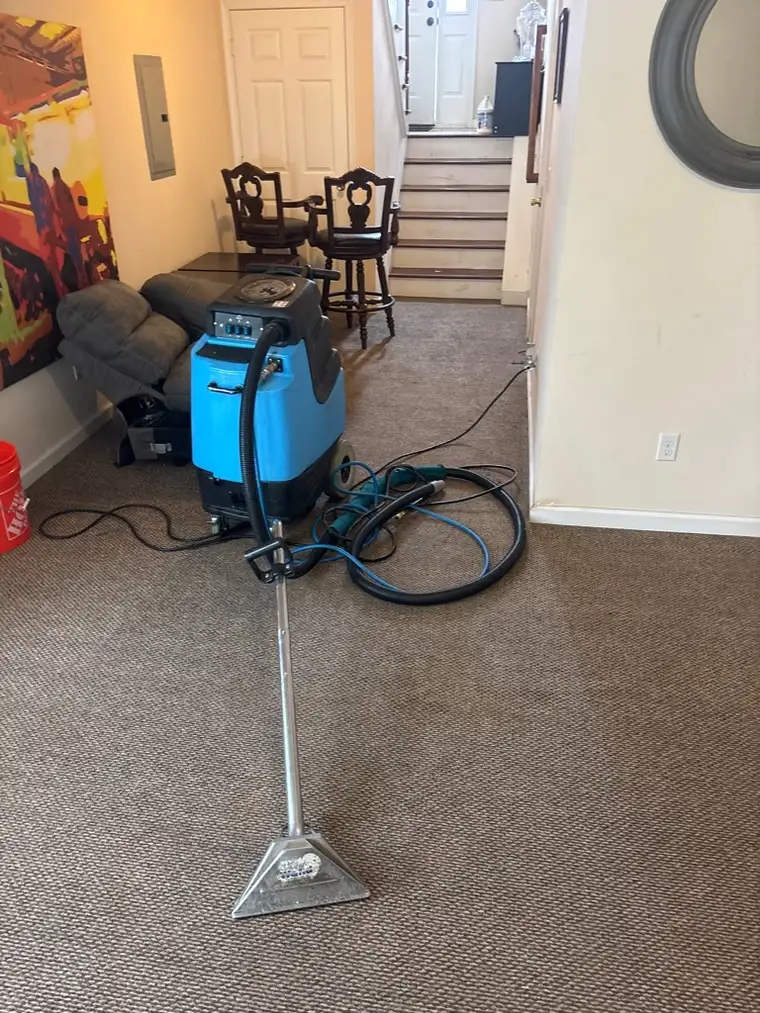
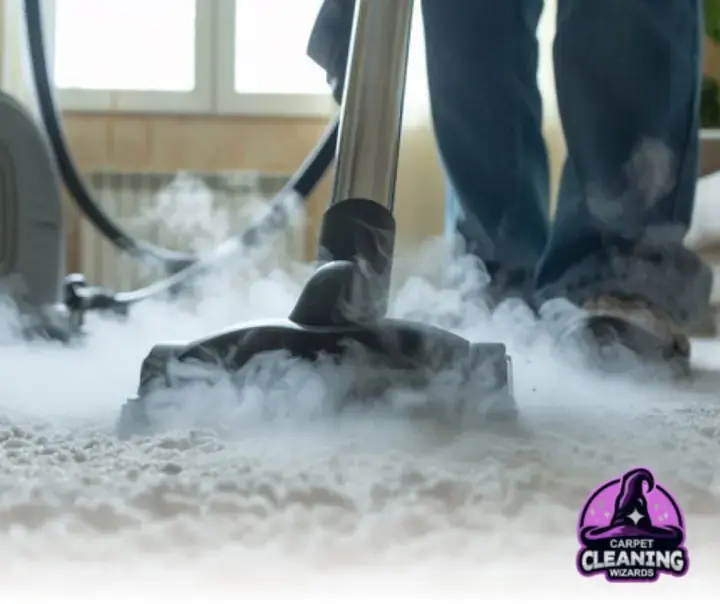
Enzyme-based cleaning solutions work differently from a degreaser. Instead of a high pH breaking down soil through alkalinity, enzymes target the specific organic material in pet urine, food spills and skin oils, breaking those molecules into smaller pieces that rinse out with plain hot water. The pH stays closer to neutral through the whole process, which is gentler on fiber and on anything that touches it afterward. Citrus-based surfactants replace ammonia as the main cleaning agent in a lot of low-residue formulas, lifting soil without the same sharp fumes. Fragrance load is kept low or left out entirely, since the goal is odor removal rather than odor masking. None of this changes the mechanics of the cleaning. Hot water extraction still applies heated water and mechanical agitation to lift soil out of the fiber, then pulls that water and the dissolved soil back out with a rinse pass. What changes is what gets left behind once the carpet dries.
Why residue is the real hazard, not the cleaning step
Hot water itself does not pose a hazard to a child or a pet. The water used in extraction cleaning is just water, heated and pressurized to loosen soil, and it gets pulled back out of the carpet along with the soil it lifted. The hazard shows up when cleaning solution goes into the carpet but does not come back out in the same rinse pass. Detergent residue left in the base of the fiber dries there once the carpet dries, and it does not stay put. Foot traffic and paw traffic grind it loose as fine dust, which is exactly the kind of particle a crawling baby or a dog's nose picks up at floor level. A thorough rinse pass, not a stronger scent or a lower pH label, is what keeps that residue from building up in the first place.
Rinsing and dry time before pets and kids go back on the carpet
A proper hot water extraction includes a clean water rinse pass after the cleaning solution has done its work, pulling dissolved soil and leftover solution back out of the fiber before the equipment moves to the next section. That rinse step is where most of the difference between a residue-heavy clean and a low-residue one shows up. Dry time matters just as much. Carpet usually needs several hours to dry fully depending on fiber type, humidity and airflow in the room.
Keeping pets and small children off the carpet until it is dry does two things. It protects the fiber from getting resoiled while it is still damp, and it keeps bare feet and paws off fiber that has not finished releasing whatever moisture is still working its way out.
Signs a cleaning left too much behind
| Sign | What it means |
|---|---|
| Fiber feels stiff or slightly sticky once fully dry | Detergent residue has dried in the base of the fiber instead of rinsing out |
| Carpet resoils faster than it used to after a cleaning | Residue attracts and holds new soil the same way old soil did |
| A stronger chemical smell shows up once the carpet dries than when it was wet | Fragrance was added to mask odor rather than remove it, and it concentrates as the carpet dries |
| A light film or powder appears on the fiber surface after a few days | Mineral or surfactant residue has worked up to the tip of the fiber |
Our guide to what eco-friendly and non-toxic labels mean on a cleaning product goes further into how to read ingredient claims before a cleaning is booked, and our piece on pet odor in carpet covers how enzyme treatment targets urine at the source instead of masking it.
When to call us
We use low-residue, enzyme-based solutions as the default on carpet cleaning jobs in Jersey City, Hoboken and Edison, along with the rest of Hudson and Middlesex counties, and we rinse every job with a clean water pass before calling it finished.
If a household includes a crawling baby, an older dog that naps on the carpet most of the day, or anyone sensitive to fragrance, say so when the cleaning gets booked. The products, rinse steps and dry time can be noted on the written estimate ahead of the visit instead of discussed after the fact.