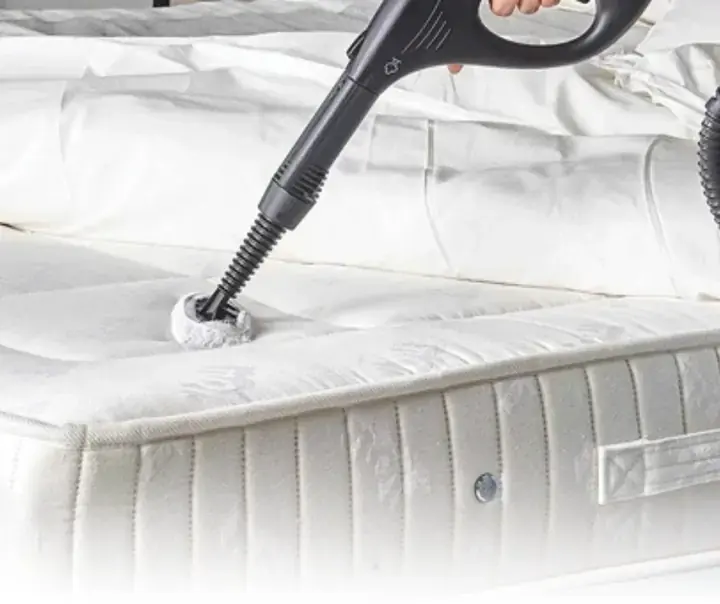
Mattress stains are usually found when the bed is stripped, after years under a fitted sheet.
A mattress carries three kinds of stain, and each one needs its own product and its own dwell time. Which one you have decides how much comes out.
Sweat and body oil yellowing
Sweat yellowing is the broad amber tint that spreads from where a person sleeps, heaviest at the head and the hips. It comes from years of overnight sweat and skin oil passing through the bedding and drying in the quilted layer under the ticking.
It lifts slowly. The treatment is applied and left to work, because this soil is oily and spread thin rather than concentrated in a ring. Rushing it is why a home attempt often leaves a mattress blotchy, with the middle of the treated patch releasing and the edges holding.
On a younger mattress the color usually comes most of the way back. On an old one it lightens rather than disappears, because part of that yellow is the fabric having changed rather than soil sitting on it.
Urine, and why the smell outlasts the mark
Urine goes further into a mattress than the visible ring suggests. The liquid spreads sideways and downward, and the outline you can see is only where it dried at the surface.
Two things are left behind, the stain and the salts. The salts are why the odor returns. They draw moisture out of the air, and bacteria break the remainder down and produce the ammonia smell. That is why a mattress that seemed fine all winter starts to smell again in humid weather.
Urine gets the longest dwell time of anything we treat on a bed. The treatment has to reach the depth the liquid reached and then come back out. The principle is the same as pet urine in carpet, covered at Pet odor in carpet: what removes it, what only masks it, with tighter limits on water because a mattress has nowhere to drain.
Spills, and the ones that set with heat
Coffee, a drink knocked over on the nightstand, a nosebleed or a sick child. These are the stains people can date, and they come out most reliably, provided nothing was done to set them first.
- Blot, do not rub. Rubbing spreads the liquid sideways and pushes it deeper into the quilting.
- Cold water only on anything protein based, meaning blood, vomit or milk. Heat sets a protein stain into the fibers and makes it permanent, so no hair dryer and no steam iron.
- Do not pour baking soda on a spill while it is still wet. It cakes into the quilting and the seams, and no vacuum removes it.
- Do not soak the area while rinsing. Small amounts of cold water, with a blot between each one, work better than a single flood.
Fresh spills come out because the quilted layer holds whatever gets past the ticking, and every hour it sits, more of it moves down.
Odor gets treated at the source
A deodorizer sprayed over a smell removes nothing. It adds a second smell on top of the first, and the first one is still being produced underneath. Once the cover wears off, the original smell returns.
Odor from urine and from sweat is bacterial. The process runs inside the material rather than on the surface. Remove what feeds it and the process stops, which is why odor work happens in the same pass as the stain work.
How long a mattress takes to dry
Usually yes. Mattress cleaning is low moisture because it has to be. A mattress is a sealed block of foam or springs inside a quilted cover, and there is no way to get air to the middle of it, so we put down enough solution to release the soil and take it straight back out.
A mattress takes 24 to 72 hours to dry, depending on the season. Two things push it toward the long end: a cold room with the door and windows shut, and a heavy urine treatment, which puts more moisture in than an ordinary clean. Air the room, leave the mattress without bedding until it is dry, and plan another place to sleep for the first night or two.
Carpet in the same bedroom dries on a different schedule, within hours in warm weather and longer in winter. There is more on that at How long carpet really takes to dry after a professional clean.
Strip the bed before we arrive
A few minutes of preparation changes what we can complete during the visit.
- Strip the bed and start the bedding in the wash. The mattress and the bedding are one system, and cleaning only one of them leaves the job half done.
- Leave a zip off cover in place. We decide on site whether it comes off or is better washed separately.
- Clear floor space on all four sides. The seams and the piping hold more than the flat faces do, and reaching them means walking around the bed.
- Point out the marks you already know about, including faded ones. Old accidents that were cleaned at the time can still be holding salts.
- Tell us if a child's mattress is included.
That last point changes the order of the work. The products are non toxic and biodegradable on every bed in the house, so the reason is drying time. The child's room is cleaned first, so it has the longest time to dry.
Renting a machine and doing it yourself
The answer depends on the stain. A rental machine on a fresh spill on a newer mattress is reasonable to try. On yellowing or on urine it usually leaves the mattress worse than it was, and the reason is the water ratio.
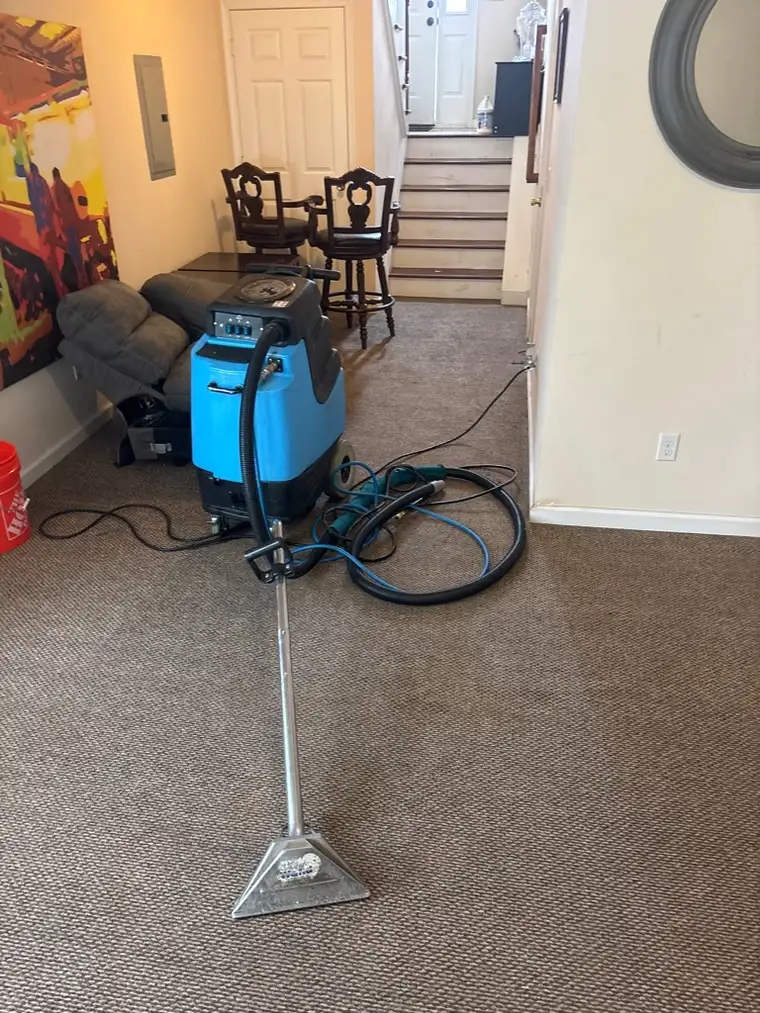
The upholstery hand tool on a rental unit puts down more water than its vacuum can pull back. On carpet the surplus runs into the padding and eventually dries. On a mattress it stays in the foam, because there is no air path to the core. Damp foam is what the odor causing bacteria need, so a contaminated mattress that gets wetted and not dried comes back smelling stronger than before.
If you do rent one, use the lowest water setting it has, pull several dry passes with the trigger off after every wet pass, and leave a fan on the mattress for the rest of the day.
Old mattresses, and what lightening looks like
A ten year old mattress carrying years of sweat and two or three old accidents is not going to look new. We say so before the work rather than after it.
An old mattress still gains: the loose material and the allergen reservoir are cut down, the odor is stopped at its source, and the staining is lighter and more even than it was. For a clear answer before you commit to anything, send a photo of the worst patch with your inquiry.
When to call us
Call when you have stripped the bed and found something you did not expect, when a smell keeps coming back in humid weather, or when somebody wakes up congested and clears by mid morning. The allergy side of it is at What a mattress clean removes, and what it does not.
We clean mattresses in the home, on the bed, in every size. All services are performed at your home or business, and we book by appointment 24 hours a day. You get a written estimate before any work starts, the products are non toxic and safe around children and pets, and a mattress takes 24 to 72 hours to dry, depending on the season. The visit is described at Mattress cleaning. We cover Union County, including Roselle, and Essex County.
To book, or to ask what your mattress needs, call (908) 545-9387. You speak directly with the technician who performs the work.