Most calls about this come about three weeks after a homeowner cleaned the carpet themselves. It looked clean when it dried. The hallway is grey again in the same strip, and it darkened faster than the first time. In most cases the carpet is holding detergent rather than wearing out.
Both methods loosen soil. They differ on the last step, the removal, and that step decides how the carpet behaves for the next six months.
How does carpet shampooing work?
Shampooing uses a rotary brush machine, a tank of foaming detergent and heavy agitation. The foam is deliberate. It suspends soil in bubbles instead of in free liquid, which puts less water into the carpet than a rinse does.
The brush drives that foam into the pile and breaks the bond between the soil and the fiber. That stage works. Shampooing does loosen soil, and it uses less water than extraction does.
The problem is the stage that follows. In the original method the foam dries and the residue is vacuumed out as a crystal the following day. With a rental machine in a house that pass is rarely made. The foam dries into the base of the pile and stays where the fibers meet the backing.
What does hot water extraction do with the same soil?
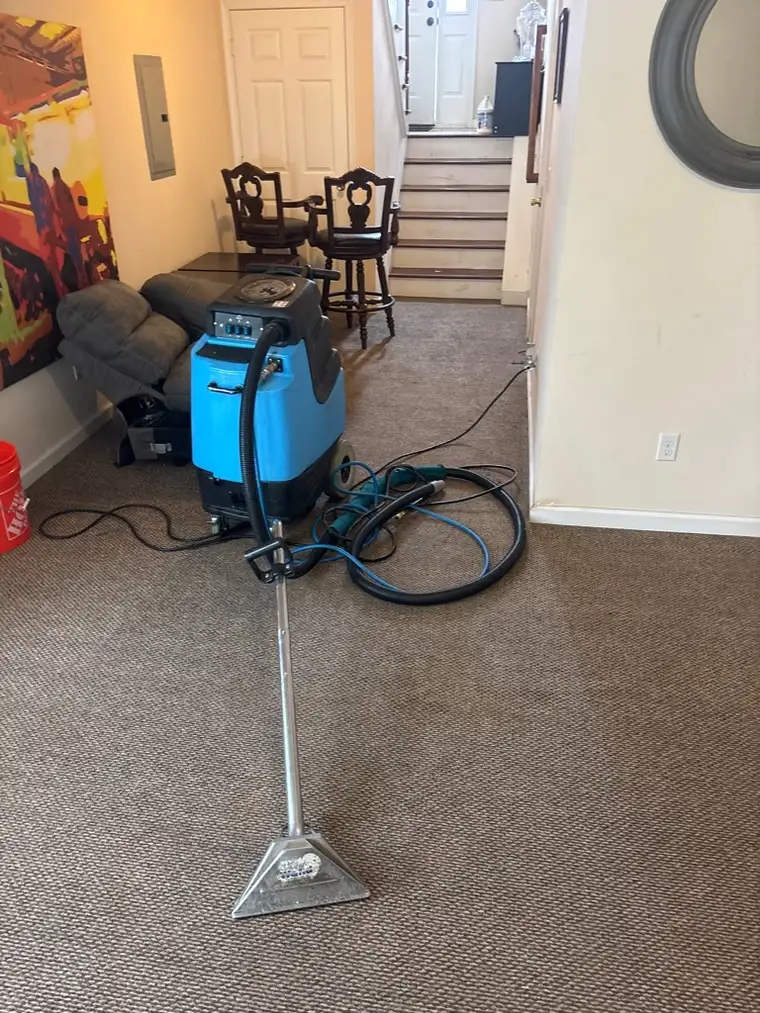
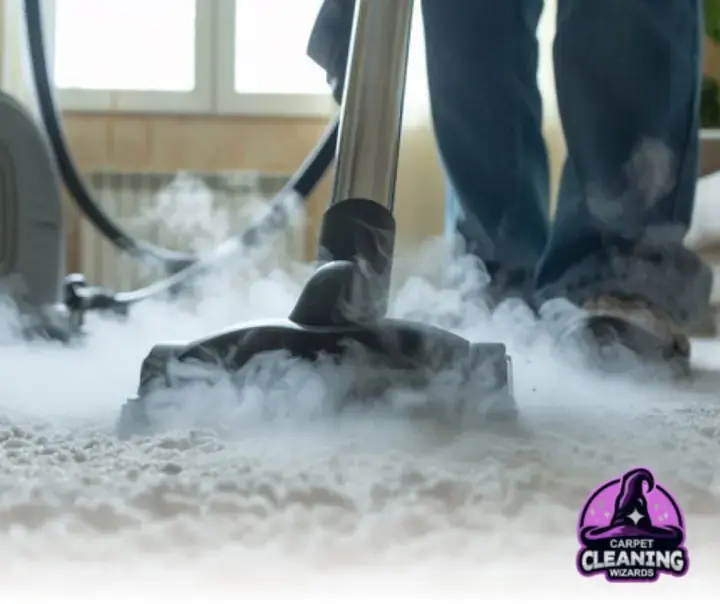
Hot water extraction heats cleaning solution, injects it into the pile under pressure and vacuums it back out through the same head half a second later. There is visible vapor and the solution is hot, and the carpet is being flushed rather than steamed.
Both methods release the soil. Only extraction carries it out of the room. What the machine puts down is drawn back into a recovery tank with the soil in it.
Extraction also reaches further down. Soil migrates toward the base of the pile and is pressed there by feet and by vacuuming, and the grey lane in a hallway sits at that depth. A brush working from above loosens it. A rinse that reaches the backing and returns removes it.
Why does detergent residue make a carpet soil faster?
Dried detergent is sticky. It remains a cleaning agent after it dries, with nothing left to rinse it away, so it sits in the pile with a slight tack and holds whatever is carried in on a shoe. Street grit and kitchen grease settle on a surface that retains them.
The carpet then does not soil evenly. It greys again along the exact path walked before, in weeks rather than months. Residue also stiffens the pile, which is the stiffness you feel underfoot.
- The traffic lane comes back within two to four weeks on the same path, instead of the room dulling slowly.
- The pile feels stiff under a hand, and it is worst where the machine passed most often.
- Wetting a small patch with plain water brings up foam that does not appear in a spare bedroom.
One of those signs on its own means little. All three in a carpet that has been shampooed is enough for us to plan the extra rinse passes before we arrive.
Does a rotary brush damage carpet fiber?
Shampooing also leaves mechanical damage. Carpet fiber is twisted, and that twist is what makes a cut pile stand up and reflect light evenly. A rotary brush driven into wet cut pile untwists and frays the filament ends, and frayed fiber scatters light differently from the fiber around it.
It appears as a dull hazy patch that remains after the carpet is clean. Loop pile and dense commercial carpet tolerate a brush, because there are no cut ends to fray. Plush and frieze in a living room do not. Distorted pile does not clean back, and we tell you that before the work begins.
When is carpet shampooing the right tool?
Shampooing is designed for commercial work. On dense low pile glue down commercial carpet carrying heavy oily soil, a rotary machine is effective. There are no cut ends to fray, and that floor is on a schedule that includes deep extraction under the interim passes.
We clean carpet, stairs, rugs and upholstery in homes across eight counties in North Jersey and Central Jersey, and in a house the balance goes the other way. The carpet is cut pile, it is cleaned once or twice a year, and no one returns three weeks later to remove the residue.
| Shampooing | Hot water extraction | |
|---|---|---|
| How soil is released | Rotary brush and foaming detergent | Heated solution under pressure, plus hand work on spots and stairs |
| How soil is removed | Vacuumed after the foam dries, if that step happens at all | Pulled back out through the same head at once, into a recovery tank |
| Detergent left behind | Most of it, unless the next day vacuum pass is thorough | Rinsed out with the solution that carried it in |
| Effect on cut pile | The brush can fray and untwist the fiber ends | No rotary brush on residential cut pile |
What we do in a house with residue in the carpet
A carpet holding old detergent takes longer than one that has never been cleaned, which is reflected in the written estimate.
- Vacuum first, including edges and stair stringers. Anything removed dry does not have to be flushed out wet.
- Identify the fiber and pile type, and dye test any carpet we are unsure of in a hidden corner before any moisture is applied.
- Pre treat the lanes and spots, then allow dwell time so the product breaks the old residue loose instead of scrubbing it.
- Work stairs, edges and spots by hand, because the machine head cannot sit flat there and that is where residue collects.
- Extract, then extract again with rinse only over the worst lanes. The second pass removes detergent.
- Groom the pile so it lies one way, and set air movers if a room has to be usable sooner.
One visit restores most carpet that is loaded with residue. A rental that has been shampooed for years can need a second visit, and we tell you before the work begins.
Is a supermarket rental machine a shampooer or an extractor?
Supermarket rental machines are hybrids. They have a brush, a solution tank and a recovery tank, so they extract in principle, but the vacuum is far weaker than a professional extraction machine and the solutions sold for them foam heavily. Some soil comes back out and much of the detergent stays.
If you use one, finish with two or three passes of plain warm water and the solution switched off. That rinse is the difference between a carpet that stays clean and one that greys again by the end of the month. These machines also put down more water than they recover, and carpet that stays damp develops an odor before it dries.
Which problems are not caused by detergent residue?
If a single stain keeps returning rather than a whole lane, detergent is probably not the cause. A pet accident that soaked into the padding wicks back up as the carpet dries. Bleach marks, sun fade and old urine that has altered the dye are a separate problem, because no color is left in the fiber to bring back.
When to call us
Call if the hallway greyed again within a month of being cleaned, if the pile feels stiff, or if you cannot tell whether a shampooed carpet is soiled or damaged. Send a photograph of the worst patch. It lets us tell you what a rinse recovers before you book a visit.
Our method and drying times are on the carpet cleaning page, and the comparison with low moisture and dry compound cleaning is on the blog. All services are performed at your home or business, and the estimate is written before any work starts.