A water damage restoration invoice rarely matches the one from the house down the street, even when both jobs involved a basement and a few inches of standing water. The number on a written estimate comes from four factors that move independently of each other: what category the water falls into, how much area got wet, how long the water sat before anyone called, and whether wet pad or drywall has to come out rather than dry in place. A technician checks each of those on site before the estimate gets written, not after.
What category the water falls into
Not every water loss carries the same risk, and the category changes both the cleanup method and the cost. Clean water comes from a source like a supply line break or an overflowing tub, water with no contamination that can often be extracted and dried in place. Gray water comes from sources like a washing machine overflow or a dishwasher leak, carrying some soap or light contamination that calls for more thorough extraction. Black water comes from a sewage backup or flooding from outside the house, carrying bacteria and waste that requires full removal of anything porous it touched, including carpet, pad and sometimes drywall.
| Water category | Typical source | What it usually means for the job |
|---|---|---|
| Clean | Supply line break, overflowing tub or sink | Extraction and drying in place, pad often salvageable |
| Gray | Washing machine or dishwasher overflow, aquarium leak | More thorough extraction, pad and carpet checked case by case |
| Black | Sewage backup, flooding from outside the house | Full removal of carpet, pad and affected drywall |
Why the affected area and depth change the number
Square footage is the most obvious piece, but it is not the only one. A hundred square feet of wet carpet in a finished basement costs less to dry than the same square footage once water has climbed a foot up the drywall and soaked into the bottom plate of a wall. Height matters as much as footprint. Drywall wicks water upward well past the line that was visible once the water receded, and that hidden wicking gets checked with a moisture meter rather than guessed at by eye.
How long the water sat before the call
Time works against wet material from the first hour. Carpet pad starts breaking down once it has been saturated for more than a day or two, and the backing can separate from the carpet above it. Drywall that stays wet keeps wicking moisture upward the longer it sits, which widens the section that eventually has to be cut out. A call placed the same day water appears usually keeps the job to extraction and drying. A call placed several days later, after an odor has set in or the baseboard has started to pull away from the wall, usually means more material has to be removed instead of dried.
When pad and drywall have to come out
Carpet itself is often salvageable even after a clean water loss. Pad is a different story, since it holds water like a sponge and rarely dries fully once soaked through, even with air movers running underneath the carpet for days. A technician checks pad condition, tack strip condition and how far up the drywall the water wicked before deciding what comes out and what dries in place. Gray and black water losses remove more by default, since contamination in the pad cannot be rinsed out the way plain water can.
Extraction, drying by meter, and the monitoring timeline
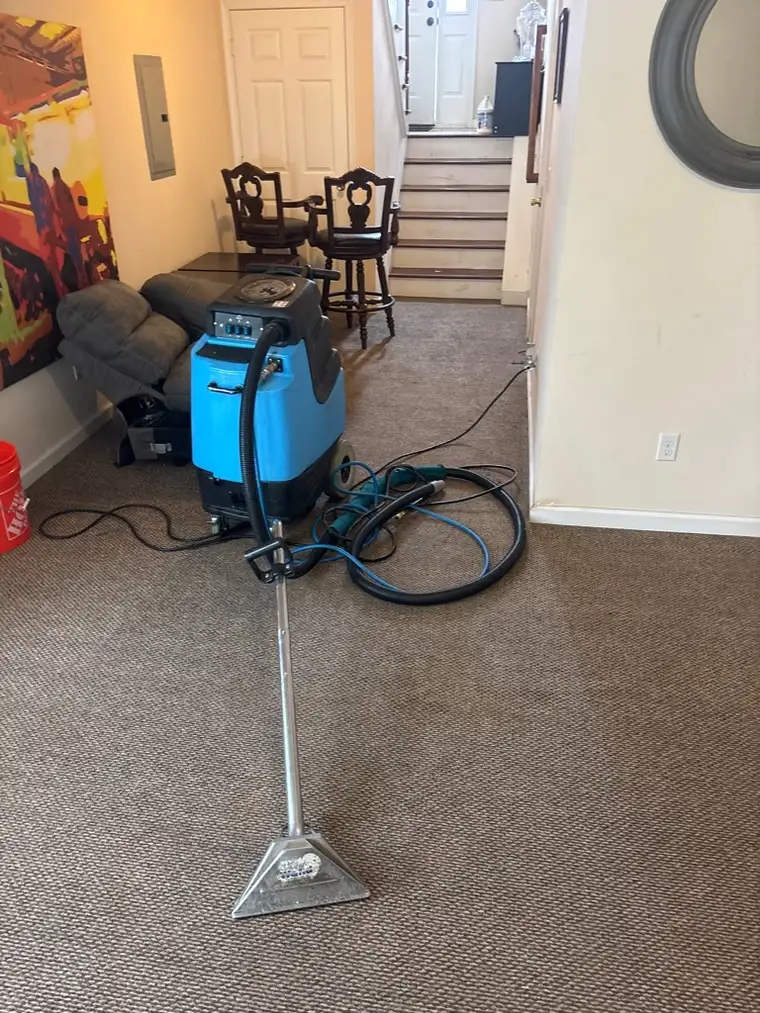
The first visit covers extraction, pulling standing and absorbed water out of carpet, pad and flooring with extraction equipment built for the volume on site. After extraction, air movers and dehumidifiers go in to pull remaining moisture out of the air and off wet surfaces. A moisture meter gets used on the affected materials at the start of drying and again on each return visit, and those readings decide when drying is finished rather than a fixed number of days on a calendar. Most residential jobs need equipment running for several days with at least one or two return visits before everything reads dry.
What the written estimate accounts for
A written estimate for water damage restoration lists the water category, affected square footage, what has to be removed versus dried in place, and the equipment and time the drying phase is expected to take. Our piece on what affects a cleaning estimate covers the same line item thinking applied to carpet cleaning, and our guide to homeowners insurance and water damage covers what a policy is likely to pay for once the estimate is in hand.
When to call us
We handle water damage restoration in Bound Brook, Manville, Little Ferry and Moonachie, along with the rest of Somerset and Bergen counties, and we move fastest when the call comes in the same day the water appears.
If water is standing or drywall is already wicking, describe the source, how long it has been wet, and the rooms affected, and ask for a written estimate that lists category, area and drying time before anything gets removed.